Looking for a “Non-Denominational Church” close to home? Here’s Something to Consider
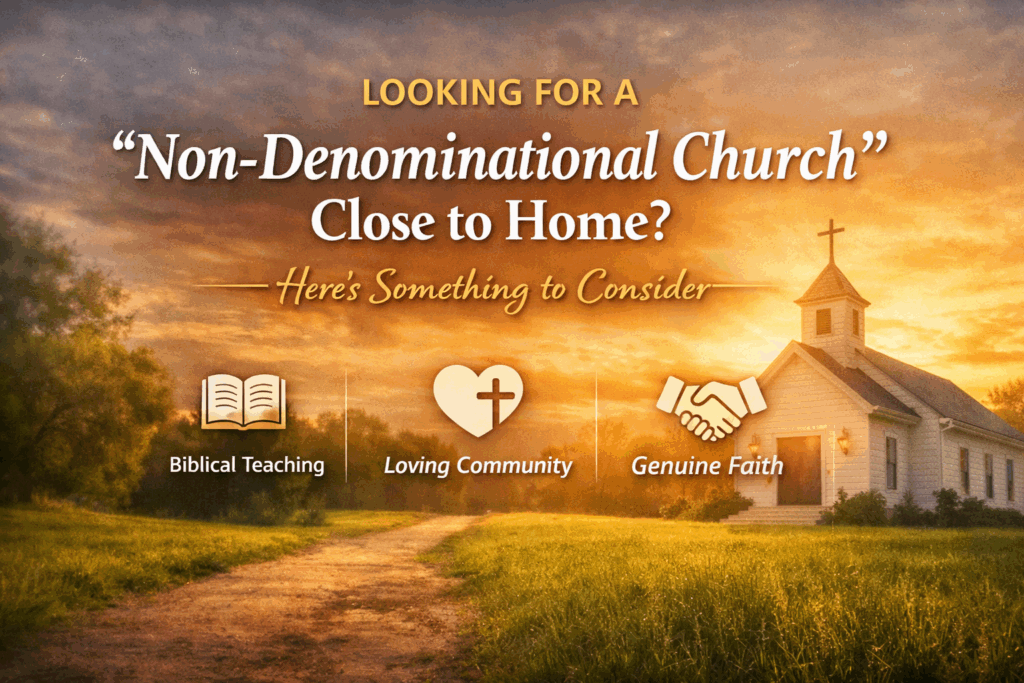
If you’ve recently searched for a “non-denominational church near me,” you’re not alone. Thousands of people every day use that phrase while looking for a church that teaches the Bible, loves people well, and avoids unnecessary tradition or division.
That desire is good—and biblical.
But here’s an important truth that often gets overlooked: every church has a denomination, whether they use the label or not.
What Does “Non-Denominational” Really Mean?
The term non-denominational sounds like a church without defined beliefs. In reality, it usually means a church that chooses not to publicly identify with a historic denomination.
However, no church is belief-less.
Every church teaches something about:
•The authority of Scripture
•Salvation
•Baptism
•Church leadership
•Worship
•The role of grace, faith, and works etc….
Those beliefs don’t disappear just because the word denomination does.
In fact, the moment a church answers questions like “What do you believe about baptism?” or “How is someone saved?” it has already placed itself within a theological category.
Denominations Don’t Create Beliefs—They Advertise Them
A denomination is not a man-made replacement for the Bible. At its best, a denomination is simply a summary of a church’s biblical convictions.
Think of it this way:
•A restaurant menu doesn’t create the food—it tells you what’s being served.
•A denomination doesn’t replace Scripture—it tells you how Scripture is understood and taught.
When a church identifies as Baptist, Presbyterian, Methodist, or otherwise, it’s not claiming superiority. It’s offering clarity.
So Why Do Some Churches Avoid Denominational Labels?
There are understandable reasons:
•Past hurt or negative experiences
•Fear of being misunderstood
•A desire to reach people who distrust organized religion
Those concerns are real. But removing the label doesn’t remove the beliefs.
A “non-denominational” church still:
•Practices a form of baptism
•Holds a position on communion
•Has a governing structure
•Teaches a specific doctrine of salvation
Most non-denominational churches in America, when examined closely, align very closely with historic Baptist theology—especially regarding believer’s baptism, the authority of Scripture, and local church autonomy.
Why Being Open About Beliefs Actually Serves People Better
People looking for a church aren’t just searching for a style—they’re searching for truth, stability, and spiritual direction.
When a church is honest about its beliefs:
•Families know what their children will be taught
•New believers know what they’re growing into
•Seekers aren’t surprised later by doctrine they didn’t expect
Transparency builds trust.
Avoiding a label may feel welcoming at first, but clarity is ultimately more loving than ambiguity.
We are Baptist by Belief, Biblical by Conviction
Being a Baptist church doesn’t mean being rigid, cold, or traditional for tradition’s sake. Historically, Baptist churches have emphasized:
•The Bible as the final authority
•Salvation by grace through faith
•Baptism as a believer’s public confession
•The priesthood of every believer
•The local church’s responsibility before God
Those convictions didn’t come from marketing—they came from Scripture.
So If You’re Searching for a “Non-Denominational Church Near Me”…
Here’s a helpful way to think about it:
Don’t ask first, “What’s the label?”
Ask, “What do they believe, and does it align with the Bible?”
You may find that a church openly identifying its beliefs is actually offering you something rare in today’s culture: honesty, theological clarity, and biblical conviction.
And that’s something worth building your life on.
“Buy the truth, and sell it not.” — Proverbs 23:23